Content Editor, Dunham | 2025 ThinkAdvisor Luminaries Award Winner | 2026 Wealthies Finalist, Thought Leader of the Year | Macroeconomics, markets, geopolitics & global trends
Listen to this blog here
12:41
Deflation is a broad, sustained decline in prices across an economy rather than slower inflation or lower prices for a few products. It can develop when spending weakens relative to supply, particularly as households and businesses reduce borrowing and repay debt. For investors, the danger is that falling prices can weaken revenues and incomes while increasing the purchasing-power burden of existing debt.
Deflation is not my base case. But high debt, weaker demand, and falling asset prices make it a risk worth watching. Here’s how those forces can interact - and why lower prices are not always good news.
Key Takeaways
Inflation was the obvious risk after 2020 - but deflation could be the next underappreciated threat.
With global debt at 240% of GDP, even mild deflation can trigger dangerous feedback loops.
High consumer debt levels, AI-driven productivity, weak demographics, and falling asset prices are classic causes of deflation.
In deflation, debt doesn’t shrink - incomes do - thus increasing the real burden on households and businesses.
Deflation is rare, but history shows it often follows periods of excessive leverage and asset bubbles.
Could deflation be the next big risk for investors?
That may sound hard to believe after the inflation shock of the last several years (and now the ongoing Iran war sending prices surging). But while inflation was the obvious threat coming out of 2020, the more underappreciated risk today may be deflation.
To be clear, deflation is not my base case. It remains a lower-probability outcome. But macro analysis is not about repeating the consensus. It is about identifying the risks the market may be overlooking.
And if inflation was the obvious risk after COVID, the question now is simple: what comes next?
I believe deflation deserves far more attention than it is getting.
Over the last several years, inflation made complete sense. Governments ran massive deficits and spending programs. Central banks flooded the system with liquidity. Supply chains were impaired while demand surged. Fiscal expansion, monetary expansion, and constrained supply all pointed in the same direction.
But those forces are no longer aligned. Some have faded. Others are beginning to reverse.
That does not mean deflation is imminent. It does mean the balance of risks may be changing.
What Is Deflation?
Deflation is not a temporary discount or weakness in one part of the economy.
It's a broad and sustained decline in prices across much of the economy - usually driven by weak demand relative to supply. And in a credit-based system, that can become deeply problematic.
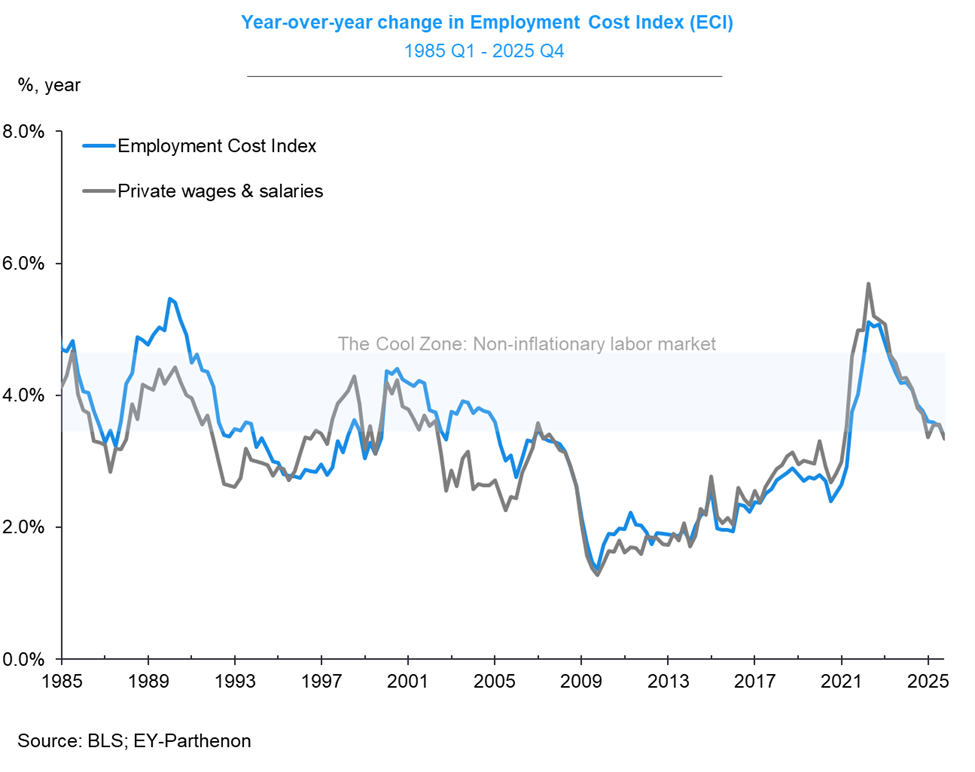
Why? Because falling prices do not just lower costs for consumers. They also weaken revenues, squeeze profits, reduce wages, increase the real burden of debt, and put pressure on growth.
That is what makes deflation so dangerous. In a heavily indebted economy, even mild deflation can create feedback loops that are very hard to stop.
Inflation vs. Disinflation vs. Deflation
Condition
What Happens to Overall Prices?
Simple Example
Inflation
Prices rise over time.
At 4% annual inflation, a $100 basket becomes $104 after one year.
Disinflation
Prices still rise, but more slowly.
Inflation slows from 4% to 2%; a basket priced at $100 at the start of the 2% year becomes $102.
Deflation
Prices decline broadly and persistently.
At 2% annual deflation, a $100 basket becomes $98 after one year.
What Could Cause Deflation Today?
At a high level, deflation tends to emerge when demand weakens while supply capacity remains strong.
In other words, when spending slows but production does not - prices slump lower.
And today, there are four major forces that can create that setup.
1. High Debt Levels
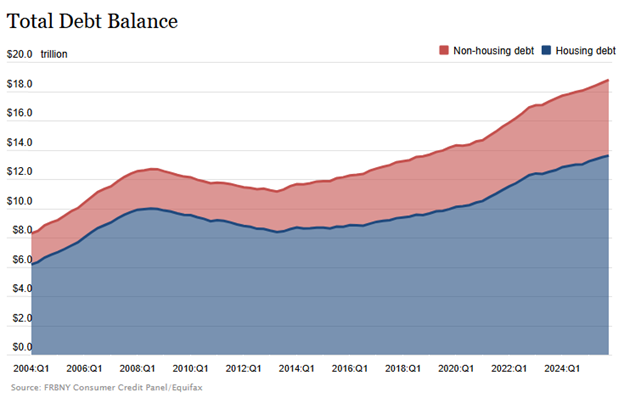
One of the most important causes of deflation is excessive debt.
As I’ve detailed before in Debt Cycles 101: Why Credit Drives Economic Growth, debt increases demand and the money supply. Thus, when households and businesses borrow, they spend more and its inflationary.
But over time, that debt must be repaid.
Put simply, when debt levels are high:
More income goes towards interest payments
Less income goes toward new consumption
Credit growth slows (people can’t keep maxing out cards)
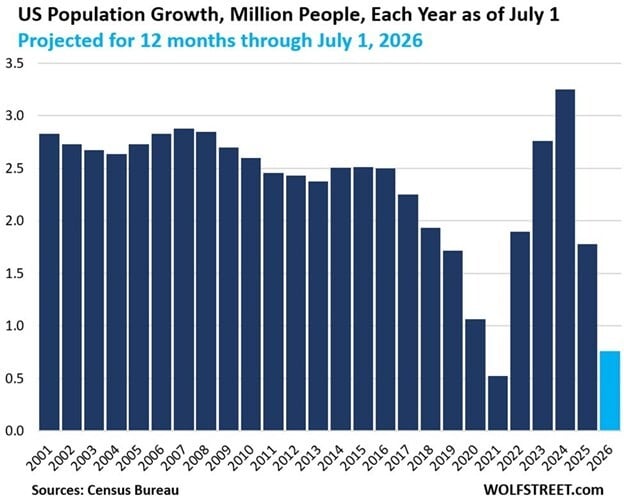
Either way – if fertility rates remain anemic (they look to continue decelerating) and immigration further slows, we can expect the population to decline. And thus, higher deflation risks.
4. Falling Asset Prices (Reverse Wealth Effect)
Another powerful deflation driver is falling asset prices.
See, many modern economies are asset-dependent. Meaning that household wealth, debt markets, and economic growth are heavily tied to assets and financial markets.
Thus, when asset prices rise, people feel wealthier - and they spend more (this is known as the wealth effect).
But when asset prices fall:
Home equity shrinks
Portfolios decline
Balance sheets weaken
People feel poorer. Spending slows. Demand drops.
For example. If your net-assets plunged 25%, you may rethink taking that cruise or buying a new car.
In that sense, collapsing asset prices are a form of deflation themselves.
And in an economy where consumption drives roughly two-thirds of GDP and debt plays a major role, that wealth effect reversal isn’t trivial.
What Exactly Is Debt-Deflation?
So, you may be thinking,
“O.K., but what’s wrong with deflation? I’d love for my costs to drop.”
I hear you. And as someone who buys things – I agree.
But remember - there are always two sides to a coin.
Inflation helps some people (like those with fixed debts or commodity producers).
Deflation helps others (like savers and people living on a fixed income).
The problem is that we live in a credit-based system. Today, the total value of financial products and debt is significantlylarger than the actual "stuff" the world produces.
In a system like this, even a tiny bit of deflation can trigger a "feedback loop" that amplifies until the whole thing spirals.
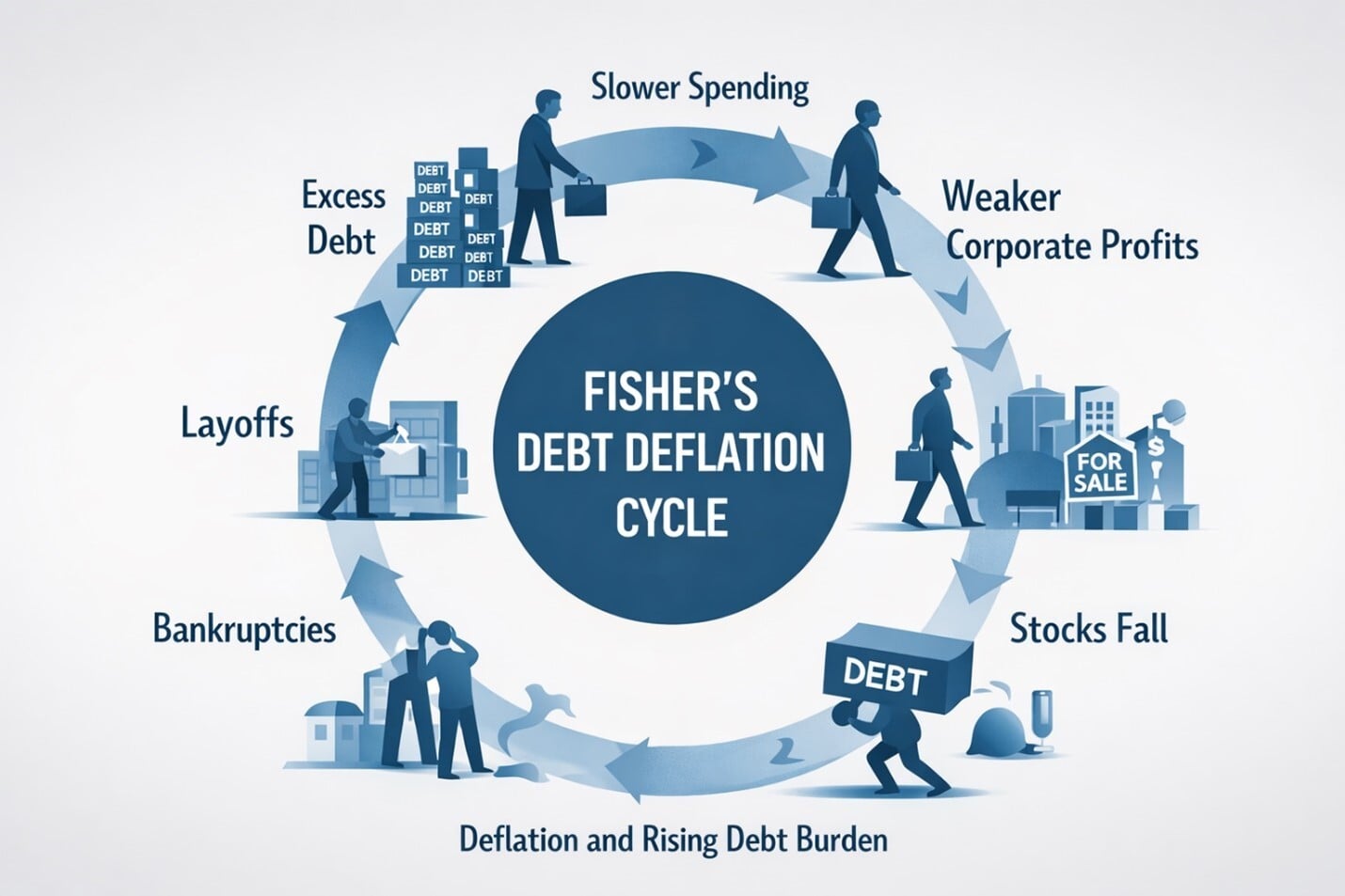
The early 20th-century economist Irving Fisher called this “debt-deflation.”6
Debt-deflation is an economic cycle where the attempt to pay down debt during a period of falling prices actually increases the "real" value of that debt, leading to a downward spiral of defaults and lower demand.
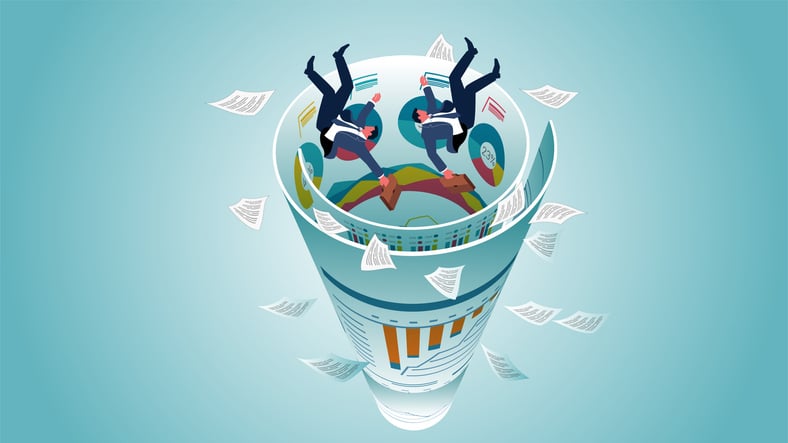
Fisher developed this theory after watching the debt-fueled implosion that triggered the Great Depression. He realized that depressions happen when debt levels stay high while asset prices and spending collapse. This creates a cycle where the very act of trying to pay off debt actually makes the debt harder to pay - leading to plunging spending, unemployment, crashing asset prices - and repeat.
Figure 4: Dunham, 2026
Here is how that spiral actually works in the real world.
How the Deflation Spiral Begins
When people expect prices to keep falling, they often delay purchases. Why buy today if something may be cheaper next month?
That behavior may seem rational for the individual, but at scale it becomes destructive. Businesses see weaker demand and cut production. Then they cut investment. Then they cut jobs.
As unemployment rises and confidence falls, spending weakens further. Missed debt payments increase. Credit conditions tighten. Asset prices come under pressure.
What began as a minor slowdown in demand can turn into a self-reinforcing cycle.
Why Debt Gets Heavier During Deflation
This is the heart of Fisher’s theory. In deflation, your debt doesn't shrink - but your income does.
Imagine you earn $70,000 and have a $300,000 mortgage. If a downturn hits and your income drops to $65,000, the bank doesn't care. Your mortgage stays at $300,000, but suddenly, that debt feels much "heavier" because it takes up a bigger slice of your smaller paycheck.
Economists call this a rise in "Real Interest Rates."
Meaning - even if the bank charges you 0%, the fact that money is becoming harder to get means the "cost" of your debt is effectively going up.
Thus, you have less money to spend on everything else.
People liquidate everything to raise cash. Prices of assets collapse. Defaults rise, credit vanishes, and the spiral tightens.
How Deflation Pressures Wages and Consumption
As mentioned above, deflation squeezes revenues. Businesses cut costs. Layoffs rise. And wages stagnate - or even decline.
And that burden won’t fall evenly.
It hits workers, small businesses, and net-debtor households hardest - essentially the bottom 80%.
Why? Because lower wages reduce disposable income and weaken consumption. But they also widen inequality - squeezing the middle class even further.
See, higher-income households rely more on assets and capital income - think dividends, interest, investments. They tend to save more than they spend (hence why they’re rich). Thus, even though asset price declines would hurt them, they have cash ready to step in and buy distressed assets.
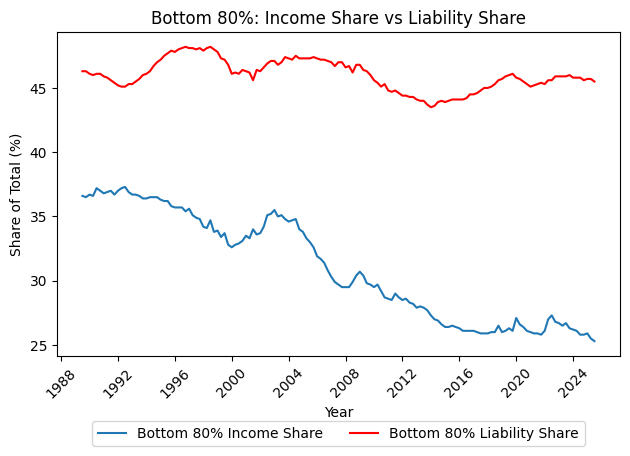
Whereas lower-income households rely mostly on wages. Have limited savings. And they carry more liabilities as a share of income.
And remember - debt is the worst thing to hold in deflation.
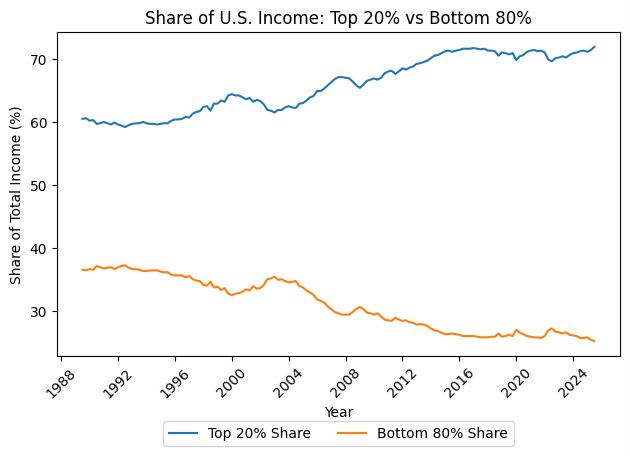
To put this into perspective - over the past three decades - the bottom 80% of U.S. households have seen their share of national income steadily shrink - while the top 20% now capture more than 70% of total income.
Figure 5: Federal Reserve.gov, February 2026
In fact, breaking it down further, the bottom 80% earn less than a quarter of national income (down from 37.6% in 1990 - yet still carry nearly half of household debt.
Figure 6: Federal Reserve.gov, February 2026
That’s a serious imbalance.
Because mass consumption depends on the middle and lower classes.
But if their income share shrinks while their debt burden rises, the system becomes increasingly dependent on credit just to sustain their spending.
Eventually, debt burdens exceed income capacity. Spending must drop. Unemployment rises. Asset prices sink.
And that reinforces the debt-deflation spiral.
Why Central Banks Struggle to Fight Deflation
Central banks are decent at fighting inflation - they just raise rates to cool things down. Fighting deflation is much harder.
When interest rates hit zero, the Fed loses its main tool. This is called a "Liquidity Trap." Cutting rates doesn’t help if people are too scared to borrow.
Look at China right now. They’ve cut rates repeatedly, but households are still dealing with falling home prices, weak wage growth, and unemployment. Taking on any more debt feels like another trap.
This is what we call "pushing on a string." You can provide the credit, but you can't force people to borrow.
And when that fails, central banks often turn to things like Quantitative Easing (QE – “money printing”).
But QE mostly pumps up the price of stocks and real estate. It can make the markets look healthy while the real economy - the one you and I live in - continues to struggle (this is why we see weak economic data send markets higher usually, because it implies more easing to come - juicing up prices).
In Conclusion
Inflation was the obvious risk after 2020. But deflation may be the next underappreciated one.
In a less leveraged economy, falling prices might seem manageable or even helpful. But in a world built on debt, asset values, and confidence, deflation can become far more dangerous than it first appears.
That is why investors should not dismiss it.
Rare does not mean impossible. Few expected China to struggle with deflation after reopening. Few believed Japan would spend decades trapped in it. Few imagined the boom of the 1920s would end in the deflationary collapse of the 1930s. And few expected the housing bubble to nearly break the global economy in 2008.
Markets have a habit of underpricing the risks that feel least intuitive in the moment.
That is why deflation is worth watching now.
Frequently Asked Questions About Deflation
What is deflation, and how is it different from disinflation? Deflation means prices are broadly falling across the economy. Disinflation means prices are still rising, but more slowly. If inflation falls from 4% to 2%, that’s disinflation, not deflation. The difference matters because slower price increases don’t create the same pressures as a sustained decline in the overall price level.
What causes deflation in an economy? Deflation can develop when demand weakens relative to supply. Households and businesses may cut spending to repay debt. Tighter credit can limit borrowing, and falling asset prices can weaken confidence and spending. Productivity gains can also lower costs. But cheaper production alone doesn’t necessarily cause a harmful cycle. The bigger concern is falling prices combined with weak demand and financial stress.
Why is deflation dangerous when debt is high? Deflation can make existing debt harder to repay, especially when wages or business revenues fall. Money buys more as prices decline, but borrowers still owe the same dollar amounts. They may cut spending or sell assets to raise cash, putting more pressure on demand and prices. This cycle is known as debt-deflation.
How does deflation affect stocks and other investments? Demand-driven deflation can hurt stocks by weakening company revenues, profits, and the ability to repay debt. Cash gains purchasing power as prices fall. High-quality fixed-rate bonds may benefit if interest rates decline, but gains aren’t guaranteed, and corporate bonds can face greater default risk. Results depend partly on whether prices fall because production is more efficient or because spending and credit are shrinking.
This communication is general in nature and provided for educational and informational purposes only. It should not be considered or relied upon as legal, tax or investment advice or an investment recommendation, or as a substitute for legal or tax counsel. Any investment products or services named herein are for illustrative purposes only and should not be considered an offer to buy or sell, or an investment recommendation for, any specific security, strategy or investment product or service. Always consult a qualified professional or your own independent financial professional for personalized advice or investment recommendations tailored to your specific goals, individual situation, and risk tolerance. All examples are hypothetical and are for illustrative purposes only.
Information contained in the materials included is believed to be from reliable sources, but no representations or guarantees are made as to the accuracy or completeness of information.
Dunham &Associates Investment Counsel, Inc. is a Registered Investment Adviser and Broker/Dealer. Member FINRA / SIPC. Advisory services and securities offered through Dunham & Associates Investment Counsel, Inc.