Content Editor, Dunham | 2025 ThinkAdvisor Luminaries Award Winner | 2026 Wealthies Finalist, Thought Leader of the Year | Macroeconomics, markets, geopolitics & global trends
Private credit is lending arranged outside public debt markets, typically by non-bank investment managers. It can give businesses flexible financing and investors access to income-producing loans. But private credit funds also borrow from banks, creating connections that can transmit losses and funding pressure back into the traditional financial system. This article explains how private credit works, why it grew, and which warning signs deserve attention.
Key Takeaways
Private credit is lending that happens outside the traditional banking system, typically by non-bank institutions.
The private credit market has grown rapidly since the 2008 financial crisis as banks pulled back from riskier and middle-market lending.
Private credit funds often operate with less transparency and lighter regulation than traditional banks.
Many large banks now indirectly fund private credit through lending and structured financing, increasing interconnected risk.
Rising leverage, borrower stress, and valuation uncertainty are emerging warning signs in the private credit market.
What appears to be “off-balance-sheet” risk in private credit can still flow back into the traditional financial system.
Private credit.
For years, it lived in the shadow of private equity - quieter, less glamorous, easy to ignore. But this year, it’s been plastered across financial headlines - and for good reason.
It’s massive, keeps growing fast, and - depending on who you ask - it’s either the savior of modern lending or the next monster hiding under the bed.
But here’s the part worth pausing on. . .
It’s massive, keeps growing fast, and - depending on who you ask - it’s either the savior of modern lending or the next monster hiding under the bed.
But here’s something I’ve learned. . .
Most people I’ve seen talking about private credit don’t really understand how it works. And honestly, even I’m still wrapping my head around parts of it - and that’s the problem.
The bigger and more complex a financial system becomes, the less anyone really knows where the risks are hiding until it’s too late.
Private credit has gone from a niche corner of “shadow” finance to a multi-trillion-dollar machine lending to companies banks wouldn’t touch. And increasingly, banks themselves are funding that machine.
History tells us that mix - rapid growth, leverage, opacity, and interconnectedness - is exactly how fragility builds.
So today, let’s peel this back and actually make sense of what private credit is, why it exploded, and why the warning signs are starting to matter.
Simply put, private credit is just lending done outside the traditional banking system – aka lending not from a Wells Fargo or Chase, but from private groups that don’t operate under hefty bank-style regulations.
The easiest way to picture it is this way - imagine your neighbor John wants money to start a business, but the bank turns him down – labeling him too risky. A group of well-off neighbors down the street hears what he’s cooking up and decides to pool their capital and lend to him privately instead. That’s essentially private credit - just scaled from $50,000 to $50 million.
This is why some people call private credit part of “shadow banking1.” Not because it’s shady, but because it sits just off to the side of the regulated banking world while still behaving like a lender (it creates credit).
Still confusing? I don’t blame you. It’s difficult to grasp for a reason.
Traditional Banks vs. Private Credit
So let’s compare the two worlds - the bright, regulated banking highway and the side road where private credit lives.
Shadow Banks: They borrow short-term money from institutional markets -money markets, pensions, even banks themselves - and use it to buy long-term assets like mortgages, leveraged loans, or corporate credit portfolios. They’re not FDIC-insured and operate more like a busy market stall in the alley - fast, flexible, and definitely less supervised.
Private credit sits in that second camp - although many funds lock up investor capital for years rather than relying on short-term funding.
Not illegal. Not hidden. Just outside the traditional banking framework.
Feature
Traditional Banks
Private Credit Funds
Where the money comes from
Deposits, borrowing, and shareholder capital.
Investor capital, sometimes supplemented by borrowing (increasingly so).
Access to funding
Many deposits can be withdrawn on demand.
Many funds lock up capital for years; others offer limited withdrawals.
Regulatory framework
Bank-specific capital, liquidity, and supervisory requirements.
Requirements vary by fund structure and jurisdiction, rather than following the same bank rulebook.
How they connect
Banks can provide financing to private-credit funds.
Funds can use bank financing alongside investor capital.
Long story short, private credit has been around for decades (essentially since the 1980s). But it was relatively niche.
That all changed after the 2008 financial crisis.
After the chaos of the housing bubble imploded - regulators looked at banks and said, “You took too much risk with too little capital - never again.”
Enter the Dodd-Frank Act - a framework that forced banks to keep higher capital requirements, stricter stress tests, and a regulatory overhaul that made traditional lending far more expensive and far less flexible for banks.
The whole point of post-crisis regulation was to make risky lending costlier for banks.
And it worked. Maybe too well (ironically).
Because when banks pulled back from riskier and middle-market loans, a massive funding gap opened up. Companies still needed money - banks just weren’t the ones providing it anymore.
They didn’t have to deal with the same capital constraints.
And they certainly weren’t bound by a bank’s rulebook.
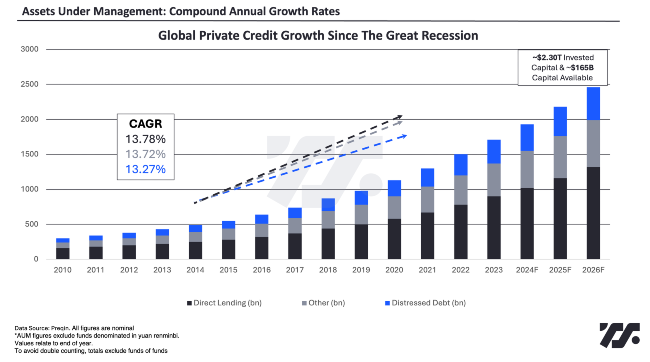
Figure 1: TruFi, July 2025
At the same time, the world was drowning in a zero-interest-rate environment. Pension funds, insurers, endowments - everyone was sitting on cheap cash and desperate for yield. Thus, private credit suddenly looked juicy - offering higher returns without the daily mark-to-market trauma of their assets.
Then came private equity (PE).
PE firms realized they didn’t need banks either. They could build - or partner - with private credit funds to finance their own leveraged buyouts.
It’s like running both sides of the chessboard - one arm bought companies, the other lent them the debt to do it.
And banks? They still wanted in (there’s tons of money being made). They just had to go through the back door.
And that’s the whole big issue I’m getting to (more shocking data below)
So, is Private Credit Dangerous?
Here’s the big question everyone wants to know. Is private credit dangerous?
Not inherently. Private credit has real benefits - especially for small and mid-sized firms that banks may avoid.
But like all things in economics and finance – something good can eventually become a systemic risk.
Meaning - there are serious concerns coming from the complexity, leverage, concentration, and opacity baked into this system. Because when lending happens “in the shadows,” risks tend to hide there too.
And do not be fooled - shadow banks can definitely rattle the traditional system.
As mentioned above, the bank turns him down for being too risky. But this time, the well-off neighbors go to the bankthemselves, pledge collateral as a group, and borrow money since they look safe. They walk out, turn around, and lend that money to John privately.
John still gets financed. And the bank’s now exposed – just indirectly (aka the risk the bank tried to avoid just moved into the other pocket).
That’s private credit’s double edge - it fills a real need, but it can also push risks to parts of the system where fewer people are watching.
And that's where things are getting worrying.
Banks Have Fed The Private Credit Beast For Years
It shouldn’t be difficult to see the symbiotic relationship between traditional banking and private credit now. Their fates are tied together - whether they like it or not.
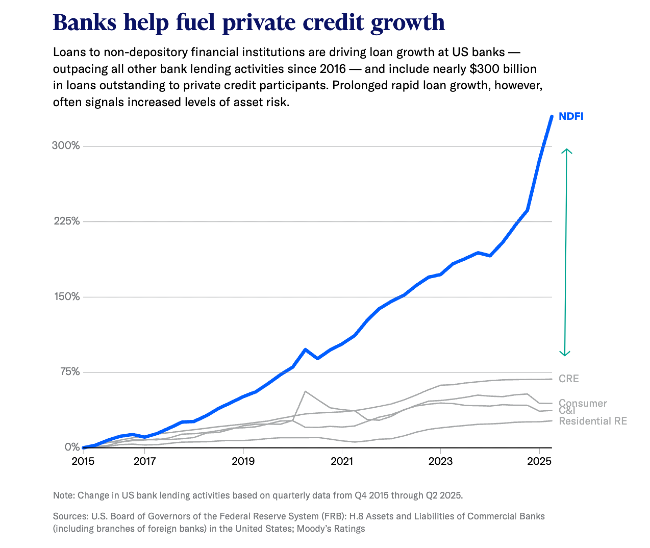
For example, banks haven’t just stepped back from lending. They’ve just been actively financing the very shadow banks that replaced them.
In other words, the well-lit storefront has been funding the overlooked market stall next door.
Since last year, large U.S. banks (>$10B in assets) have been required to disclose their lending to shadow banks. And the data shows about $1.2 trillion in exposure, dominated by just the top 25 banks.
The point here is that there’s been an enormous amount of leverage plowed into private credit that’s extremely concentrated.
And like all new things that get too popular too fast - overhype, oversaturation, and diminishing returns started creeping in.
Thus, just as private credit deals peaked, the macro backdrop around the world began to slow. Growth decelerated. Rates stayed higher for longer. Refinancing got harder. And suddenly, the tide pulled back.
Put simply, private credit is under serious stress.
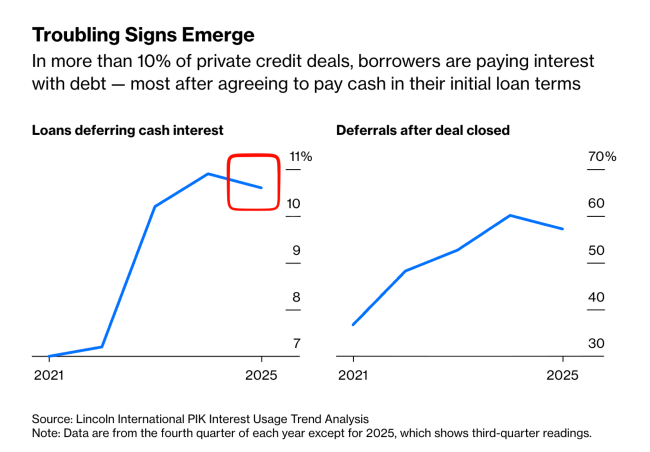
Deferring cash interest is simply a borrower saying, “Look, I can’t make this payment today - let’s just roll it into the loan and pretend everything’s fine.” And lenders agree, because marking a loan as distressed creates headaches for everyone. But when more than 10% of borrowers are doing this? That’s trouble.
Figure 3: Bloomberg, December 2025
Furthermore, at least 45 firms have been taken over by their lenders - the highest count in six years.
And the cherry on top of all this is that private credit is now aggressively funding AI and data-center buildouts – which are massive, long-dated projects with (very) uncertain payoffs.
I’ve written in more detail about this elsewhere - Is the AI Bubble Primed to Burst? Three Warning Signs Ahead - but the gist is that many of these firms are borrowing heavily at a time when valuations are stretched, returns so far have been modest at best, and excess capacity risks are rising. All this supply of AI buildouts can lead to diminishing returns - leaving a lot of debt backing a lot of concrete and silicon.
The point is, uncertainty in private credit is building.
And if there’s one thing investors can’t stomach – it’s uncertainty.
Wrapping it Up
Private credit is both the hero and the villain of this cycle.
It stepped in when banks stepped back. It kept credit flowing. It kept deals alive and helped create some great firms and products we use today through financing.
But somewhere along the way - it grew into a system so large and so intertwined with traditional finance that the line between “innovation” and “fragility” blurred.
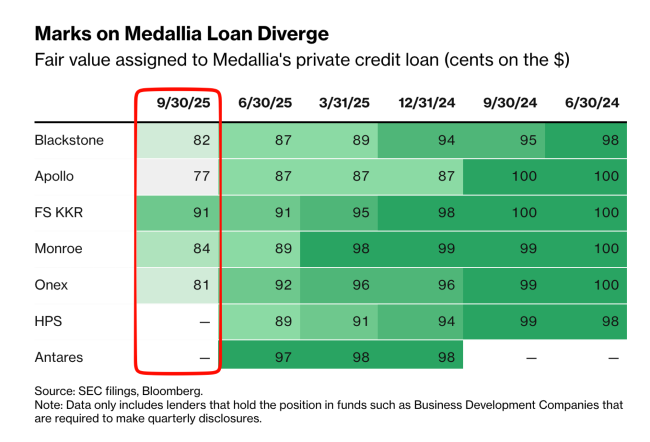
When valuations differ by 20 cents on the dollar for the same loan. . .
When banks quietly funnel hundreds of billions into shadow lenders. . .
When borrowers can’t pay cash interest and lenders look the other way. . .
When the concentration keeps rising. . .
That’s not static noise. It’s a signal.
Thus, while there’s a lot to admire about private credit. There’s also a lot we still don’t see.
And in markets, what you don’t see is usually what hurts you.
As always, this is just some food for thought.
Frequently Asked Questions About Private Credit
What is private credit? Private credit is financing arranged outside public debt markets, typically by non-bank investment managers. Funds pool investor capital to make loans under privately negotiated terms. Strategies vary, from corporate direct lending to asset-backed and distressed lending.
How are banks exposed to private credit? Banks can lend to private-credit funds and related vehicles through credit lines and other financing arrangements. Those links can expose banks to losses or funding demands when borrowers or funds come under pressure. The exposure depends on collateral, contractual protections, and the structure of the financing.
Does payment-in-kind interest signal distress? Payment-in-kind interest adds interest to a loan balance instead of paying it in cash. It can be part of the original agreement or introduced later. A change made because a borrower cannot meet cash payments can signal stress, while contractual PIK alone doesn’t establish distress.
Why can private-credit valuations differ? Private loans trade less frequently than public securities, so managers often estimate their value using models and assumptions. Different views about repayment, recovery, and market conditions can produce different marks. Comparisons should account for the valuation date and the specific loan being valued.
This communication is general in nature and provided for educational and informational purposes only. It should not be considered or relied upon as legal, tax or investment advice or an investment recommendation, or as a substitute for legal or tax counsel. Any investment products or services named herein are for illustrative purposes only, and should not be considered an offer to buy or sell, or an investment recommendation for, any specific security, strategy or investment product or service. Always consult a qualified professional or your own independent financial professional for personalized advice or investment recommendations tailored to your specific goals, individual situation, and risk tolerance.
Information contained in the materials included is believed to be from reliable sources, but no representations or guarantees are made as to the accuracy or completeness of information.
Dunham & Associates Investment Counsel, Inc. is a Registered Investment Adviser and Broker/Dealer. Member FINRA/SIPC. Advisory services and securities offered through Dunham & Associates Investment Counsel, Inc.