Content Editor, Dunham | 2025 ThinkAdvisor Luminaries Award Winner | 2026 Wealthies Finalist, Thought Leader of the Year | Macroeconomics, markets, geopolitics & global trends
Updated September 2026: Inflation has three causes: too much demand, too little supply, or too much money in the system. Economists call these demand-pull, cost-push, and monetary inflation. Most textbooks label the third force "built-in inflation" instead, but the underlying driver is the same - central bank policy and the money supply. As of August 2026, U.S. headline CPI is running 3.4% year-over-year, with core CPI (excluding food and energy) at 2.4%. All three forces hit at once during 2020–2023, and the Federal Reserve's September 2026 rate hike to 3.75%–4% shows the same three-force dynamic now working in reverse, with the Fed citing inflation still running well above its 2% target
Key Takeaways:
Demand-Pull Inflation arises when consumer demand exceeds supply — causing prices to rise simply because there’s too much money chasing too few goods.
Cost-Push Inflation results from disruptions on the supply side — such as energy shocks or raw material shortages — forcing businesses to raise prices.
Monetary Inflation is caused by increases in the money supply, typically driven by central bank policies like interest rate cuts and quantitative easing.
All three inflation types fueled the post-COVID price surge, making this the most inflationary period in decades.
Understanding how inflation works helps investors and retirees make smarter portfolio decisions, especially during uncertain economic times.
What Are the Three Types of Inflation?
People often ask, “Why are prices going up?” or “Is the Federal Reserve responsible for inflation?”
The truth is, inflation isn’t just about money printing - it’s actually driven by three key forces:
Demand-Pull Inflation – Too much spending, not enough supply.
Cost-Push Inflation – Rising production costs force higher prices.
Monetary Inflation – Expansion of the money supply.
These three types interact in complex ways, shaping everything from housing prices to grocery bills.
In this article, I'll break down each inflation type in simple terms - and show you how they all contributed to post-pandemic price surges.
Here’s how the three main types of inflation differ, what tends to cause them, and where they often show up.
Consumer, business, or government spending rises faster than the supply of goods and services.
Stimulus payments, strong wage growth, or low borrowing costs increase spending when supply cannot keep up.
Prices rise as more buyers compete for limited goods and services.
Cost-push inflation
Production costs rise or supply falls because of shortages, energy shocks, tariffs, wage pressure, or supply-chain disruption.
An oil-price spike, crop failure, or supply-chain disruption raises business costs.
Businesses may raise prices to protect margins, even if demand is flat.
Monetary inflation
Easy monetary and credit conditions support faster growth in spending, lending, and asset prices relative to the economy’s productive capacity.
Very low interest rates and large-scale asset purchases can make borrowing cheaper and support more spending.
Can amplify demand-driven inflation and contribute to broader price pressure over time when money and credit grow faster than the economy’s ability to produce goods and services — in plain English, too many dollars chasing too few goods.
In practice, inflation doesn't often come from just one source. For instance, demand may create upward pressure on prices while improving supply conditions pull prices down - partly offsetting each other.
But other times, all three forces move in the same direction. Think back on the post-pandemic surge - it saw strong demand, supply disruptions, and unusually loose fiscal and monetary conditions at the same time.
When this situation happens - it's the perfect storm.
Demand-Pull Inflation: When Too Many Dollars Chase Too Few Goods
Demand-pull inflation happens when demand outpaces supply, pushing prices higher. Put simply, there’s more spending power (income) chasing a limited supply of goods, and this pushes prices up.
For example, in the Middle Ages, during times of peace, there would be fewer men dying in wars. Meanwhile, they’d marry younger and have more children. And on and on.
This increased the population and therefore led to an increase in prices because the supply of goods couldn’t keep up with more mouths to feed.
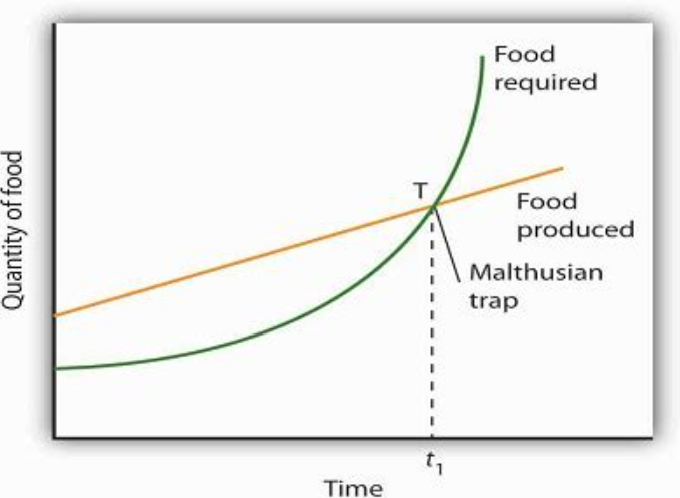
In fact, this is what led Thomas Robert Malthus – a leading English economist in the 18th century - to come up with the ‘Malthusian Trap1’; which essentially meant population growth directly influenced food prices, wages, and the standard of living.
Put simply, human history was generally stuck in a loop when population growth outpaced2 agricultural production, causing rising prices, famine, or war – thus resulting in poverty and depopulation.
Figure 1: The Malthusian catastrophe simplistically illustrated
According to some, the only way out of this multi-century-long trap was the beginning of the Industrial Revolution (early 1800s) which brought modern innovation to allow mass agricultural production. Thus, increasing supply faster than before and kept prices from rising.
But the main takeaway here is that demand – all else being equal – can cause inflation on its own.
Cost-Push Inflation (Supply Shocks, Energy, Raw Materials)
Cost-push inflation happens when businesses face higher costs or a drop in supply and pass some of those costs on to consumers. Common triggers include energy shocks, raw-material shortages, tariffs, and supply-chain disruptions.
For instance:
A major discovery of copper could lead to falling copper prices due to the increased supply.
Russia’s invasion of Ukraine (2022) disrupted oil and gas supply, making energy prices spike worldwide.
Here's how it works:
Imagine demand for apples growing 1% a year. But then, suddenly, there’s a massive orchard failure from bad weather and apple output sinks 50%.
Thus, prices for apples would likely increase sharply amid the declining supply.
This is important because even without increased demand, prices can still rise from changes in supply (remember, it’s called demand and supply).
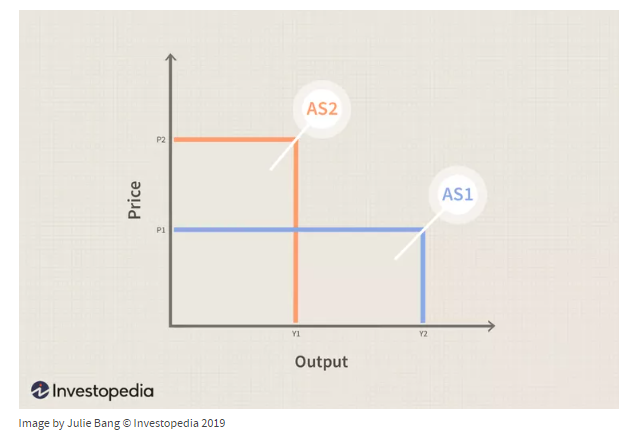
For those interested in charts, here’s a good technical one showing3 how cost-push inflation works (AS stands for aggregate supply; aka total output).
Figure 2: Investopedia, 2019
Thus, the main takeaway here is when supply is reduced, costs go up - leading to inflation even if demand doesn't rise.
Is a Central Bank Responsible for Inflation?
Monetary inflation is the most volatile of the three inflations as it can amplify demand through increased purchasing power (putting more money in people’s hands). Or lead to changes in supply as more money chases new supply sources (more money flowing into marginal investments).
But, generally speaking, increasing the money supply does increase prices only as long as people keep spending.
Now, there’s a popular misinterpretation that the Federal Reserve “prints” money. But that’s not exactly right.
Because the Fed technically doesn’t print anything. However, they can influence inflation by tinkering with bank reserves.
Bank reserves are the cash minimums that financial institutions must have on hand to meet central bank requirements. This is real paper money that must be kept by the bank in a vault on-site or held in its account at the central bank.
For example, if a financial institution holds $1,000,000 in deposits and the reserve ratio is set at 10%, then the minimum cash reserve the financial institution needs to maintain is $100,000 ($1,000,000 times 10%).
Put simply, the Fed can pump money into banks, increasing bank reserves available, and thus influencing them to lend more (or vice versa).
How does this work?
In short, when the central bank (let’s say the Fed) engages in quantitative easing (QE), they’re essentially buying assets from banks – such as U.S. treasuries – and giving them reserves instead.
Then, these banks that are now sitting on more reserves would feel influenced to lend more (aka turn the reserves into yielding loans).
Now – quantitative tightening (QT) – is the opposite.
Cost-Push: Global supply chain disruptions reduced the supply of goods.
Monetary Inflation: Federal Reserve policies expanded the money supply.
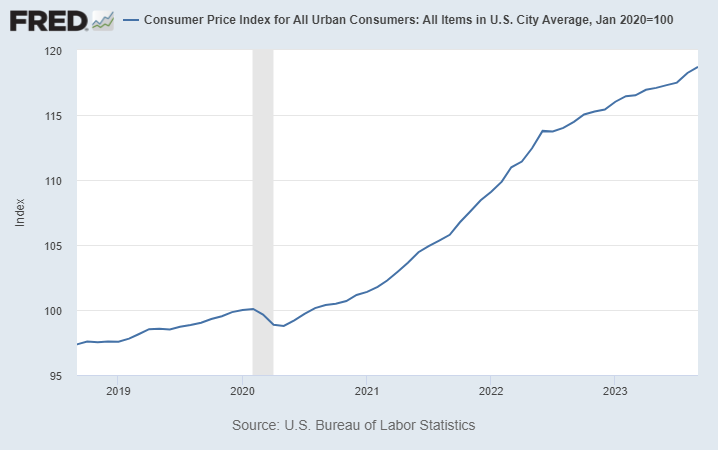
Figure 3: St. Louis Federal Reserve, 2023
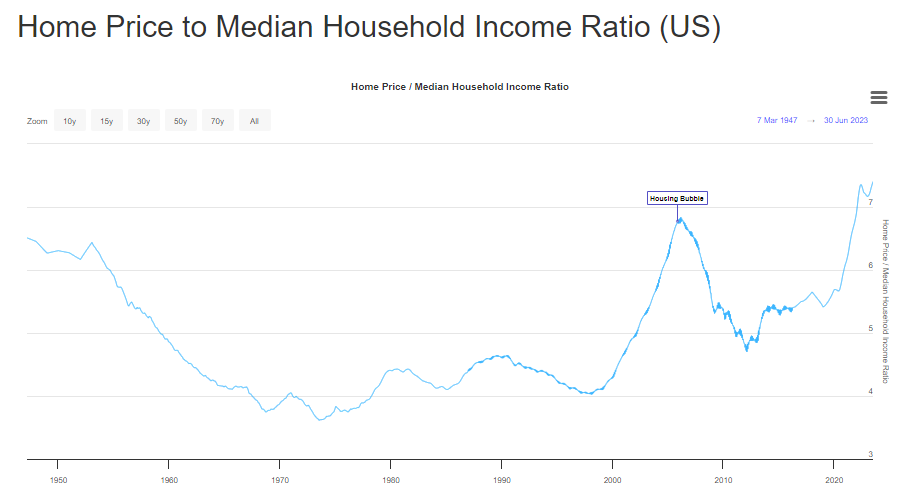
Meanwhile, home prices to median household income (aka pre-tax annual income of two or more people) have soared to an 80-year high of 7.40x4.
This implies that it now takes 7.4 years of all pre-tax median income to buy a home outright.
Figure 4: Home Price to Median Household Income
These are just two examples of the sharp price increases that have affected many around the country.
But how did we get here?
Here's the backdrop: when the COVID pandemic struck in March 2020, the world watched as global policymakers endeavored to mitigate potential repercussions.
Yet, their strategies had a resoundingly inflationary impact when we look at it through the threetypesof inflation.
Cost Push Inflation – whenglobal supply chains ground to a halt as economies worldwide shut down, resulting in a collapse in the outflow of goods.
Demand Pull Inflation - when U.S. government injected a substantial amount of liquidity into the system. Measures such as student-loan deferments, mortgage forbearance, PPP loans, direct stimulus checks, tax credits, and the like, augmented purchasing power, thereby artificially increasing demand as spending capacity soared.
Monetary Inflation - when the Fed embarked on an aggressive easing course. They implemented measures such as zeroing out interest rates, infusing reserves into banks through quantitative easing (QE), indirectly purchasing corporate bonds, and acquiring over $2 trillion in mortgage-backed securities (MBS), among others. These policies maintained loose credit conditions and artificially buoyed asset prices, especially in the real estate sector.
At that point, the Fed was pouring gasoline onto a fire. . .
Consequently, between 2020 and 2022, these three elements—supply-side, demand-side, and monetary—simultaneously fueled inflation.
And – unfortunately – this is something the U.S. economy is still dealing with as of writing.
What This Means for Your Money
Understanding the three types of inflation helps you make sense of rising prices and plan around them.
The point is:
Demand-pull inflation comes from too much spending chasing too few goods.
Cost-push inflation happens when supply shrinks or costs rise.
Monetary inflation comes from central bank policy expanding the money supply.
Post-pandemic inflation happened because all three hit at once.
Frequently Asked Questions About Types of Inflation
What are the three types of inflation? The three main types are demand-pull, cost-push, and monetary inflation. Demand-pull happens when spending outpaces supply. Cost-push comes from rising production costs or supply shocks. Monetary inflation happens when the money supply grows faster than the economy. Some economists swap monetary inflation for built-in inflation, which describes wage-price feedback loops, but the root cause circles back to too much money chasing too few goods.
Is the Federal Reserve responsible for inflation? The Fed doesn't print physical money, but it shapes the money supply through bank reserves, interest rates, and asset purchases. When it adds reserves, banks lend more and prices tend to rise. When it tightens policy, the opposite happens. The Fed's quarter-point rate hike to a 3.75%-4% range in September 2026 shows that tightening playing out in real time.
What caused the post-pandemic inflation surge? It came from all three forces hitting at once. Stimulus checks and near-zero rates boosted demand (demand-pull). Frozen supply chains limited goods (cost-push). And the Fed's bond-buying program pumped trillions into the financial system (monetary). CPI peaked near 9% in 2022 and cooled to 3.4% by August 2026, though it's ticked back up as gas prices climbed.
How does inflation affect retirement savings? Inflation erodes the purchasing power of cash and fixed income over time. Retirees who rely on level withdrawals or bonds without inflation protection can watch their real spending power shrink year after year. Knowing which type of inflation is driving prices helps decide whether inflation-hedged assets, TIPS, or more equity exposure make sense.
This communication is general in nature and provided for educational and informational purposes only. It should not be considered or relied upon as legal, tax, or investment advice or an investment recommendation, or as a substitute for legal counsel. Any investment products or services named herein are for illustrative purposes only and should not be considered an offer to buy or sell, or an investment recommendation for, any specific security, strategy, or investment product or service. Always consult a qualified professional or your own independent financial professional for personalized advice or investment recommendations tailored to your specific goals, individual situation, and risk tolerance.
Dunham & Associates Investment Counsel, Inc. is a Registered Investment Adviser and Broker/Dealer. Member FINRA/SIPC. Advisory services and securities offered through Dunham & Associates Investment Counsel, Inc.