Content Editor, Dunham | 2025 ThinkAdvisor Luminaries Award Winner | 2026 Wealthies Finalist, Thought Leader of the Year | Macroeconomics, markets, geopolitics & global trends
The “SaaS-pocalypse” describes the early-2026 software-stock selloff as investors questioned how AI could reshape subscription revenue. A central concern is per-seat pricing: companies may need fewer paid users as AI changes how work gets done.
Key Takeaways
AI is challenging how software companies earn recurring revenue. Fewer paid seats and greater competition could weaken growth expectations.
Per-seat pricing creates a potential pressure point. Customers may buy fewer licenses if smaller teams can handle the same workload.
Debt can amplify the disruption. Slower growth makes interest payments and refinancing harder for highly leveraged firms.
Enterprise integration can support customer retention. Switching costs, proprietary data, and essential workflows may help established platforms compete.
Pricing adaptation is a key development to watch. Usage-based, outcome-based, and hybrid models offer different ways to charge for AI-enabled software.
Listen to this blog here
10:40
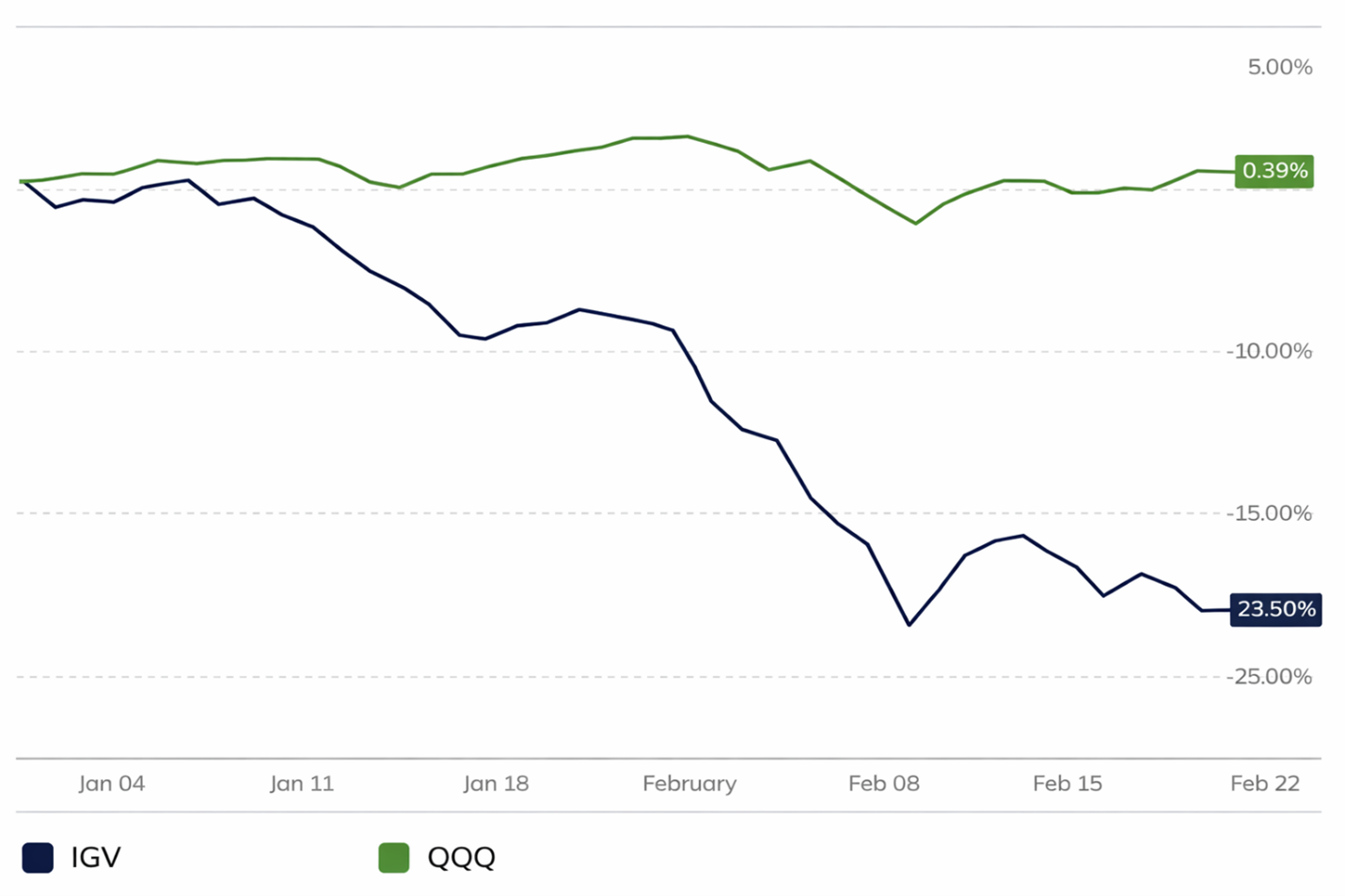
Software-as-a-Service (SaaS) stocks have been brutalized in recent weeks.
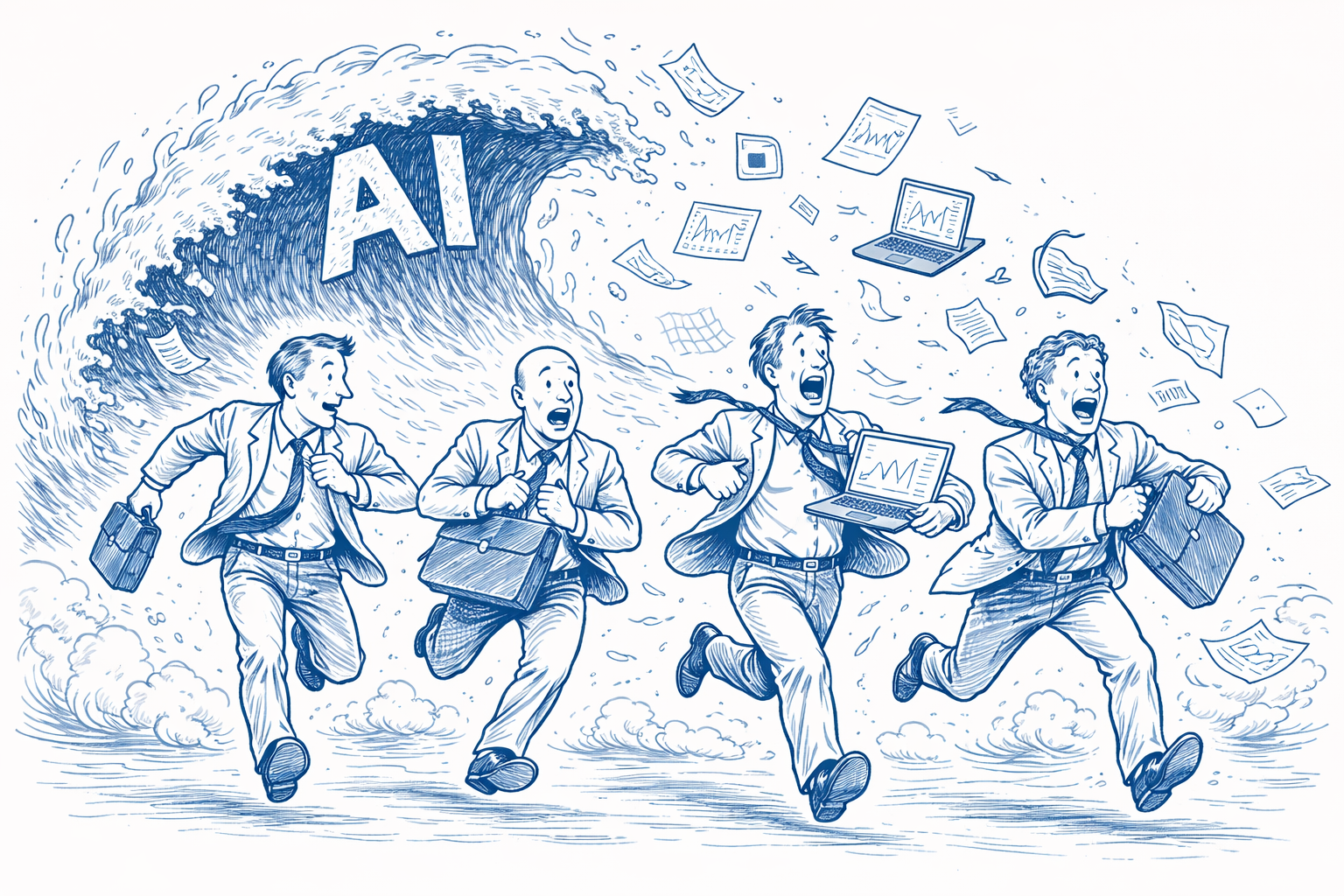
It came so suddenly - as if AI just waged a blitzkrieg on the entire software sector.
Blitzkrieg = German for "lightning war" - a World War II military strategy designed to achieve swift, decisive victories using coordinated, overwhelming force before enemies could react.
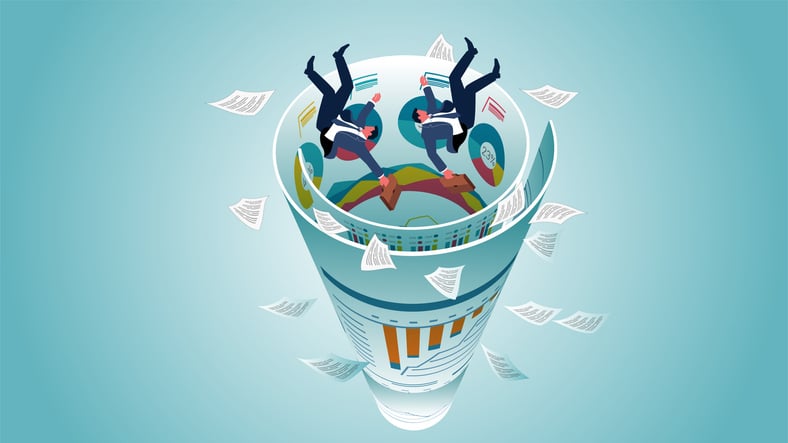
Thus, what followed was a sharp market sell-off now dubbed the “SaaS-pocalypse.”
The big question now: Is this just a market overreaction? Or are the entire hundreds of billions in SaaS models structurally facing extinction?
As always, every narrative is deafened by short-term noise - loaded with some truths and some falsehoods.
I'd wager that SaaS extinction is overblown. But there are some serious issues facing these firms.
Let's break it all down.
What Is SaaS? (And Why Investors Loved It)
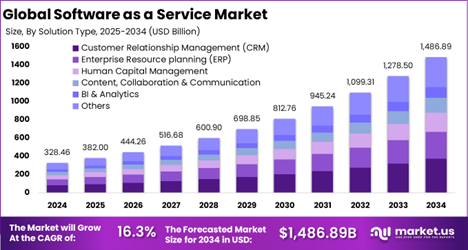
SaaS - Software-as-a-Service - means accessing software hosted by a provider, typically through a subscription. Many business platforms charge by user, or “seat,” while others charge by usage or combine several pricing methods.
Let’s say three designers each have a paid software seat. If AI lets one designer handle the same workload—and the company cuts its subscription from three seats to one - the seat-based bill falls by roughly two-thirds, assuming the price per seat stays the same.
That’s a simplified example. The actual revenue impact depends on contract terms, pricing changes, and whether the customer buys additional AI services.
Keep in mind that over the past several years, many SaaS firms borrowed aggressively in the leveraged loan market to finance private equity buyouts, betting that subscription-based revenue streams were stable and predictable to justify excessive debt taking.
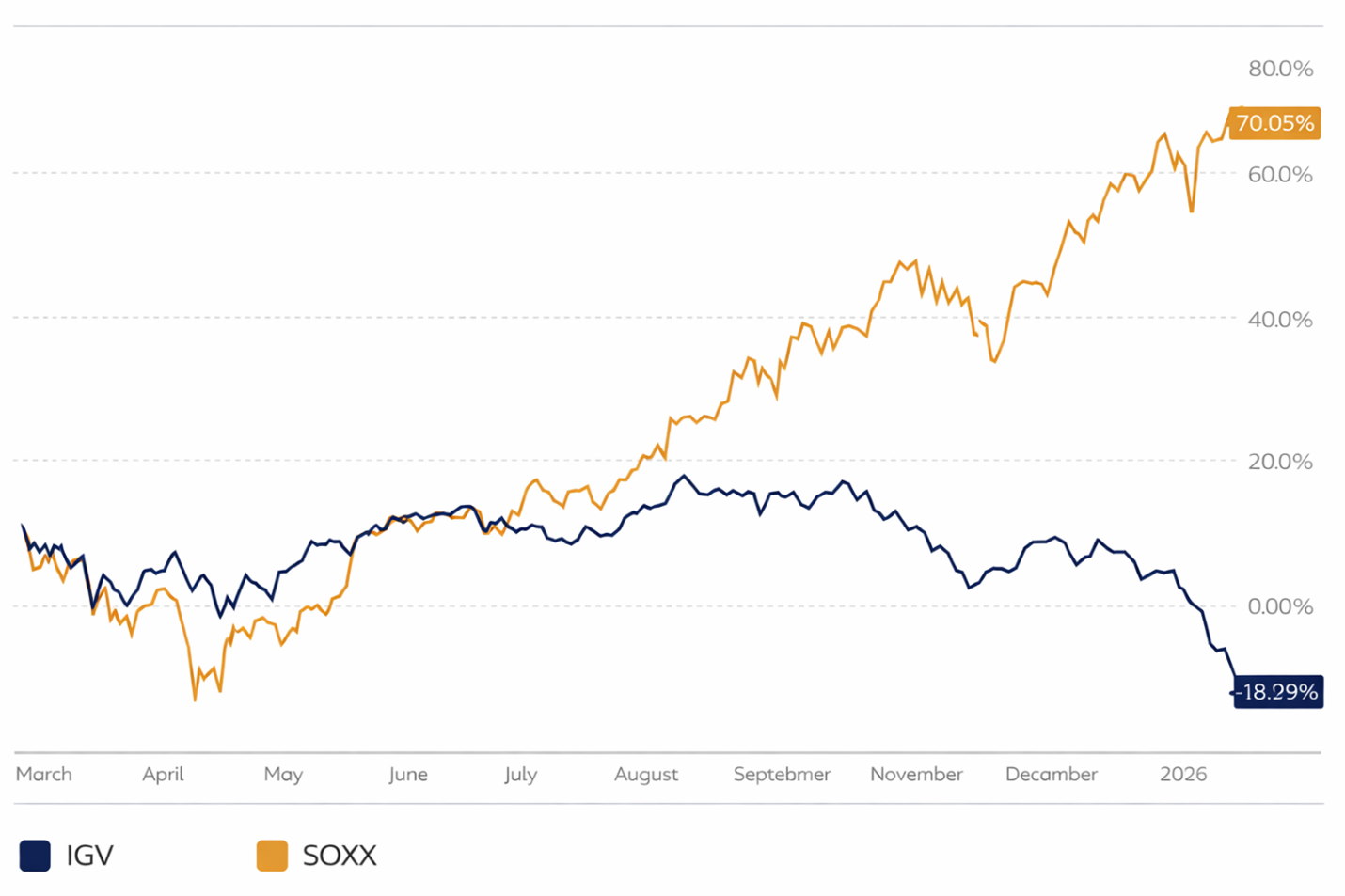
This is potentially an inflection point for a sector that hit an all-time high just a few months ago.
Sectors this big aren't usually supposed to implode this fast.
So, what gives?
Well, the math isn't mathing in the right direction anymore
Why the SaaS Seat-Based Pricing Model Is Breaking Down
As I mentioned earlier in my example, if a company employs three designers that each need to use Adobe, it then buys three licenses. Thus, Adobe gets 3x the money per corporate client.
But now, what happens when one employee - empowered by AI tools - can do the same work as three?
The SaaS invoice drops 66%.
That’s a potentially huge loss – becoming an existential revenue threat across SaaS firms.
Making matters worse, if SaaS firms are bleeding seats – they will likely slash prices to try and keep current clients happy – leading to further declining margins.
And that’s freaking investors out.
SaaS Valuation Compression: Why Software Multiples Are Falling
For years, SaaS stocks commanded premium valuation multiples for four big reasons:
Growth appeared durable.
Net revenue retention (NRR – aka how much existing customers spend over time) frequently exceeded 100%.
Seat expansion kept booming
Pricing power felt stable and defensible amid proprietary software
Put simply, revenue upside fueled frothy sentiment.
But as we all know, valuation is not priced in on past performance - it’s priced on forward growth expectations.
Meaning – markets don’t care about the past. They only care about how you look moving forward.
If a firm's future looks exciting and bright – its valuation likely is higher. And if it looks bleak – expect it to be much lower.
And this is where AI changes the equation.
Because if artificial intelligence:
Reduces seat count.
Reduces employee-driven expansion.
Rolls out new tools.
Forces a price war (firms undercutting each other to retain clients).
Then the forward growth curve can flattens and start declining.
And if the growth curve flattens and declines – prices can keep sinking and firms default on their burdens of debt.
So, Are Markets Overreacting? Possibly.
“O.K., I know more about SaaS to gauge what’s going on. But what does that mean now?”
And that’s the important question, right? Where do we go from here?
It’s clear that AI is disrupting the SaaS sector – or at least many are pricing that in (we don’t fully know yet).
Many are treating it like when the first car replaced the horse-carriage – marking an inevitable extinction.
And while there are serious concerns about SaaS firms – it may appear things were oversold as panic spread.
Here’s why.
1. SaaS Infrastructure is Entrenched
Many SaaS platforms are deeply integrated into enterprise workflows – meaning the weeds run deep.
Switching (or rebuilding) infrastructure isn’t cheap. Migration can lead to problems. And AI does not eliminate the need for core systems of record (It helps them).
2. AI Often Integrates Into SaaS
Many SaaS firms have already embedded AI directly into their own products.
Companies like Adobe, Hubspot, Salesforce, Microsoft, and ServiceNow have already integrated AI layers into existing platforms.
This opens the door for these new AI plugins to be integrated in - potentially justifying premium higher SaaS tiers.
3. Enterprise Risk Aversion
Large organizations tend to move slowly.
Compliance requirements, steep costs, cybersecurity, and governance frameworks make abrupt wholesale replacement unlikely.
Thus, AI disruption may be gradual rather than immediate.
4. Productivity Doesn’t Always Reduce Headcount
Historically, productivity gains often expand output before they reduce labor. Meaning it makes things more efficient.
Put simply, AI may actually increase total output rather than shrink teams.
So yes - extinction fears are valid. But they may be overexaggerated.
What Happens Next?
The likely path forward is less dramatic - but still significant.
Short-term company multiples compress as growth assumptions reset (aka share prices stay under pressure). This could cause some issues for firms looking to refinance - or even make them dilute more shares to raise cash.
SaaS firms adapt and explore usage-based or output-based models. Basically, adjust their pricing so customers pay based on usage, which helps slow revenue losses and smooth things out.
Consolidation spreads as AI-native firms potentially absorb weaker SaaS players. This is the Darwinian phase - where the strong get stronger and the weak die out (which is worrisome as it could lead to less competition = fewer consumer choices).
Survival for those who adapt revenue architecture faster than markets adjust expectations – allowing them to find a floor as investors come back to pick up the pieces.
I believe step two is the key angle to watch now as SaaS firms try to pivot from per-seat pricing to usage-based or performance-based pricing (or whatever clever ways to keep making money).
Those that can’t? Well, they’ll face sustained margin pressure.
The Bottom Line
The SaaS-pocalypse is about fragility in a seat-based revenue model that's under siege from AI.
Keep in mind - AI didn't eliminate demand for software. It just killed the assumption that revenue scales linearly with headcount. And that SaaS growth was untouchable.
Frequently Asked Questions About the SaaS-Pocalypse
What does SaaS-pocalypse mean? The SaaS-pocalypse describes the early-2026 software-stock selloff as investors reassessed how AI could affect subscription businesses. The concern was that AI could reduce the number of paid users, bring more competition, and make future growth harder to predict.
How could AI affect per-seat pricing? AI could let customers complete more work with fewer licensed users, putting pressure on software companies that charge per seat. Vendors may respond with higher-value products, charges based on usage, or hybrid contracts that combine more than one pricing model.
Will AI replace SaaS companies? AI’s impact will vary across SaaS companies. Essential workflows, proprietary data, the cost of changing integrations, and successful AI products may help established vendors compete. Companies whose features are easy to copy could face more pressure as AI gives customers more options.
What should investors watch during the SaaS-pocalypse? Investors can watch paid-seat trends, customer retention, AI revenue, delivery costs, cash flow, and debt maturities. Taken together, these measures can help show whether a software company is adapting profitably or facing more pressure on its subscription business.
This communication is general in nature and provided for educational and informational purposes only. It should not be considered or relied upon as legal, tax or investment advice or an investment recommendation, or as a substitute for legal or tax counsel. Any investment products or services named herein are for illustrative purposes only and should not be considered an offer to buy or sell, or an investment recommendation for, any specific security, strategy or investment product or service. Always consult a qualified professional or your own independent financial professional for personalized advice or investment recommendations tailored to your specific goals, individual situation, and risk tolerance. All examples are hypothetical and are for illustrative purposes only.
Information contained in the materials included is believed to be from reliable sources, but no representations or guarantees are made as to the accuracy or completeness of information.
Dunham &Associates Investment Counsel, Inc. is a Registered Investment Adviser and Broker/Dealer. Member FINRA / SIPC. Advisory services and securities offered through Dunham & Associates Investment Counsel, Inc.
SaaS-Pocalypse Explained: How AI Threatens Software Pricing | Dunham