Content Editor, Dunham | 2025 ThinkAdvisor Luminaries Award Winner | 2026 Wealthies Finalist, Thought Leader of the Year | Macroeconomics, markets, geopolitics & global trends
Nearly 40% of today’s financial advisors are expected to retire just as an estimated $90 trillion begins shifting from Baby Boomers to younger generations. That timing is creating a growing advisor shortage at the exact moment Millennials and Gen Z need guidance most — and a once‑in‑a‑generation growth opportunity for firms and advisors who step up to serve them.
Key Takeaways:
Nearly 40% of financial advisors are expected to retire within the next decade, accelerating an already serious financial advisor shortage.
Millennials and Gen Z are projected to inherit over $90 trillion — the largest intergenerational wealth transfer in U.S. history.
Roughly 72% of new financial advisors leave the industry within their first few years, worsening the talent gap.
Gen X, Millennials, and Gen Z increasingly want digital‑first, tech‑savvy advisors with broader investment fluency, including alternatives.
For firms and individuals who adapt, the advisor talent gap and $90 trillion wealth transfer create a rare, long‑run growth opportunity.
Why the Financial Advisor Profession Is at a Turning Point
The financial advisor profession is entering a historic turning point.
That combination is creating a growing financial advisor shortage at the exact moment demand for retirement planning and wealth management guidance is surging.
Some call it a talent crisis.
Others call it a once-in-a-generation opportunity.
But one thing is clear — the advisor workforce is shrinking just as the largest wealth transfer in history accelerates.
Why does this matter?
Because the traditional Baby Boomer-era model of wealth management — buy-and-hold portfolios, 60/40 allocations, and in-person meetings — aren't enough anymore.
They want digital-first communication, technology-driven planning tools, and advisors who understand alternative investments, tactical strategies, and even digital assets.
Yet with too few new advisors entering the profession — and nearly 72% of rookies leaving within their first few years — the question becomes urgent:
Who will manage the next generation of wealth?
How the Financial Advisor Shortage Is Accelerating
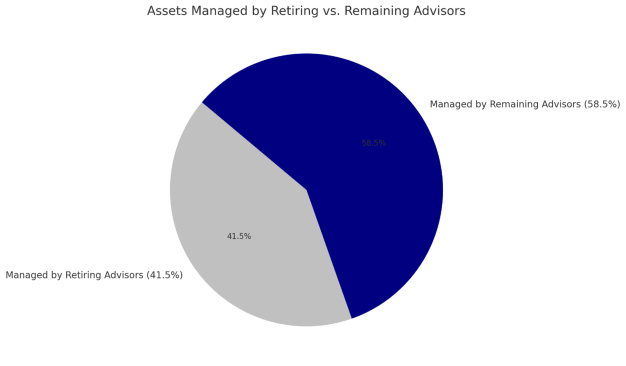
According to a Cerulli Associates report in 2023, approximately 109,093 financial advisors are projected to retire within the next ten years. This accounts for 37.5% of the current advisor workforce and represents professionals managing over 41.5% of total industry assets. Thus, as these experienced advisors exit, the need for new talent to replace them has never been greater.
Figure 1: Cerulli Associates, Dunham, January 2025
Yet, the industry is struggling to recruit and retain the next generation of advisors. . .
The same report noted that in 2022, only 2,579 new advisors entered the profession - a fraction of what’s needed to balance out the retirements.
This growing mismatch raises concerns about who will manage the massive transfer of wealth happening over the next few decades.
Why 72% of New Financial Advisors Leave the Industry
Making matters worse is the issue that becoming a successful financial advisor is notoriously difficult.
Such a high attrition rate can be attributed to several factors – such as:
Client Acquisition Pressure: New advisors are often expected to build books of business from scratch.
Licensing and Regulatory Complexity: Multiple exams, compliance hurdles, and ongoing requirements create barriers to entry.
Compensation Structures: Many firms rely heavily on commission-based models that favor established producers.
Long Ramp-Up Period: It can take years to build stable recurring revenue.
Put together, and this has amplified a talent bottleneck.
And it's happening at the exact moment when more advisors are needed.
How the $90 Trillion Wealth Transfer Creates a Once‑in‑a‑Generation Opportunity
Despite these challenges, the financial advisory industry is full of opportunities for those willing to step up.
For starters, fewer new entrants + high failure rates = a bigger market share for those who succeed.
Meaning that supply and demand are in your favor - the industry needs new talent, and clients need advisors who understand their world.
Thus with the retirement of seasoned professionals amid the ongoing generational wealth transfer, younger advisors who establish themselves now could be positioned for significant success.
Why This Matters:
Client Demand is Growing – As older generations age and divest to the younger generation, the need for financial planning services is surging.
Firms Are Looking for New Talent – With so many advisors leaving, firms are actively seeking younger professionals, often offering incentives like training programs, salary-based compensation, and mentorship.
Technology-Enabled Advisory Models: Firms that integrate planning software, AI-driven insights, and digital engagement tools align better with next-gen client expectations.
Thus, the firms that modernize will attract both clients and talent.
What’s Next for the Financial Advisor Profession?
The financial advisory profession is at a turning point.
The old guard is leaving. The new guard is nowhere in sight. And the wealth transfer? Well, it’s already in motion and quickly picking up speed.
Advisors who can adapt, build relationships, and embrace modern client engagement strategies will find themselves in an industry with high demand, strong earning potential, and long-term career stability.
So, the question is: who will step up to fill the gap?
Frequently Asked Questions About the Financial Advisor Shortage
How many financial advisors are expected to retire soon? About 109,093 advisors, roughly 37.5% of the current workforce, are projected to retire over the next decade, according to Cerulli Associates. Those advisors manage more than 41.5% of total industry assets. Meanwhile, only 2,579 new advisors entered the profession in 2022, far short of what's needed to replace the coming wave of retirements.
Why do so many new financial advisors leave the industry? Roughly 72% of rookie financial advisors leave within their first few years. Reasons include pressure to build a client base from scratch, tough licensing and compliance requirements, commission-heavy pay structures that favor established producers, and a long ramp-up period before income becomes stable. Together, these factors create a steep barrier for newcomers trying to stay in the field.
How much wealth is expected to transfer to Millennials and Gen Z? An estimated $90 trillion is projected to move from Baby Boomers to Millennials and Gen Z over the next couple of decades, according to industry research. It's described as the largest intergenerational wealth transfer in U.S. history, arriving at the same time nearly 40% of current advisors are set to retire.
What do next-gen clients want from a financial advisor? Millennials and Gen Z tend to want digital-first communication and technology-driven planning tools rather than the traditional buy-and-hold, in-person model. They also look for advisors comfortable discussing alternative investments, tactical strategies, and digital assets. Firms and advisors who build these capabilities are better positioned to connect with next-gen clients as wealth moves to younger generations.
How can firms fix the financial advisor talent shortage? Firms are turning to structured mentorship programs, hybrid salary-plus-bonus compensation, and modern client acquisition tools like digital marketing, social media, and CRM automation to cut reliance on cold calling. Many are also adopting technology-enabled advisory models with planning software and AI-driven insights, aiming to better match what next-gen clients expect and improve advisor retention.
This communication is general in nature and provided for educational and informational purposes only. It should not be considered or relied upon as legal, tax or investment advice or an investment recommendation, or as a substitute for legal or tax counsel. Any investment products or services named herein are for illustrative purposes only and should not be considered an offer to buy or sell, or an investment recommendation for, any specific security, strategy or investment product or service. Always consult a qualified professional or your own independent financial professional for personalized advice or investment recommendations tailored to your specific goals, individual situation, and risk tolerance. All examples are hypothetical and are for illustrative purposes only.
Information contained in the materials included is believed to be from reliable sources, but no representations or guarantees are made as to the accuracy or completeness of information. This document is provided for information purposes only and should not be considered as investment advice.
Dunham & Associates Investment Counsel, Inc. is a Registered Investment Adviser and Broker/Dealer. Member FINRA/SIPC. Advisory services and securities offered through Dunham & Associates Investment Counsel, Inc.