Content Editor, Dunham | 2025 ThinkAdvisor Luminaries Award Winner | 2026 Wealthies Finalist, Thought Leader of the Year | Macroeconomics, markets, geopolitics & global trends
Older investors are frequent targets for cyber scams and financial fraud because they may control substantial retirement assets, face more complex financial decisions, and have less opportunity to recover from a large loss.
The financial damage can be severe. In 2025, people age 60 and older submitted more than 201,000 fraud complaints to the FBI’s Internet Crime Complaint Center (IC3), reporting more than $7.7 billion in losses. That was a 59% increase increported losses from the prior year.
For many retirees, a scam is not simply an expensive mistake. It can alter their retirement plan, reduce their independence, and create stress for the entire family.
Financial advisors cannot eliminate fraud. But they can help clients build safeguards, recognize warning signs, and slow down when a suspicious request appears.
Key Takeaways
Older Americans reported more than $7.7 billion in fraud losses to the FBI in 2025, highlighting the growing financial threat facing retirees and other older investors.
Scammers often use urgency, impersonation, secrecy, emotional manipulation, and fake investment opportunities to pressure victims into acting before they verify a request.
Large or unusual wires, abrupt changes to beneficiaries or trusted contacts, and a new person directing a client’s financial decisions can signal possible financial exploitation.
Advisors can help protect clients by discussing fraud early, maintaining updated trusted-contact information, documenting escalation procedures, and encouraging a “pause before you pay” mindset.
Broker-dealers may have the ability under FINRA Rule 2165 to place temporary holds on certain disbursements or transactions when they reasonably believe financial exploitation has occurred or may occur.
As Baby Boomers approach retirement, they should be enjoying the fruits of their labor - not worrying about falling victim to financial scams.
But unfortunately, a growing threat is lurking, poised to undermine their financial well-being.
I’m talking about cyber scams and financial fraud.
These crimes are not isolated incidents but part of a disturbing trend that shows no signs of slowing down.
As fraudsters become more sophisticated, targeting retirees has evolved from mere crime into a full-blown crisis.
As a financial advisor, here’s what you need to know to protect your clients.
Baby Boomers and Fraud Losses Have Soared
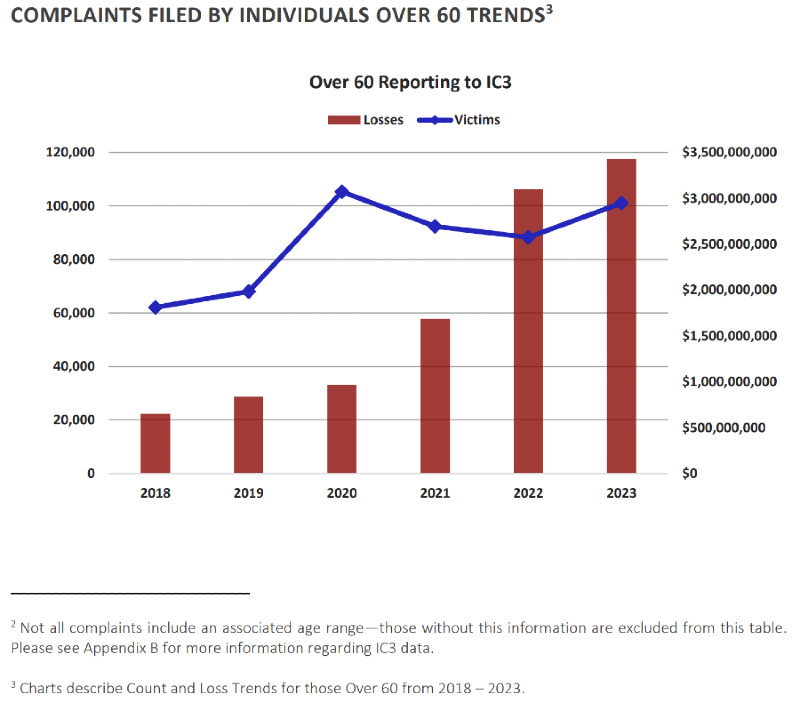
Baby Boomers, with their substantial savings and a lifetime of accumulated wealth, have attracted fraudsters like moths to a flame. In 2023 alone, over 100,000 Baby Boomers reported being victims of scams, .
The impact of these losses becomes even more pronounced when you look deeper into the data.
For instance, nearly 6,000 individuals lost more than $100,000 each – which is a devastating blow for retirees who rely on their savings to fuel their retirement.
According to the April 2024 ProtectedIncome report2, about two-thirds of “Peak Boomers” (the youngest of the Baby Boomer generation) are financially unprepared for retirement, with many likely to face significant financial challenges based on their current assets.
To put this into perspective, over half of Peak Boomers - 52.5% - have assets of $250,000 or less and will lean heavily on Social Security to get by in retirement. Thus, losing $100,000 to fraud is a potentially fatal financial blow for more than 52% of Baby Boomers about to retire.
Making matters worse is that these numbers only scratch the surface. Many cases go unreported due to the embarrassment or lack of awareness that often accompanies these crimes.
For older adults, these frauds and scams do more than just deplete their finances. They can shatter their retirement dreams and cause distress.
Thus, as scammers become more sophisticated, using technology and social engineering to fool even the savviest individuals, the need for proactive measures to protect Baby Boomers has never been more urgent.
Why Are Baby Boomers More Vulnerable to Financial Scams?
Factually speaking, in the eyes of scammers, Baby Boomers are ideal targets.
This combination of risks isn’t just a concern - it’s a call to action for those who can help steer Baby Boomers through their retirement planning and protect them from financial fraud.
And yes, I’m talking about you, the financial advisor.
Red flags advisors should watch for
Of course, financial advisors aren't investigators - and they should follow their firm’s policies, legal guidance, and applicable state requirements.
Still, they may be among the first professionals to notice a change in a client’s financial behavior.
Potential signs of financial exploitation include:
A large wire or withdrawal that is inconsistent with a client’s usual activity
A client who seems unusually anxious, secretive, or pressured to act immediately
A new friend, caregiver, romantic partner, or relative directing the client’s financial decisions
Sudden changes to beneficiaries, powers of attorney, account registrations, or contact information
A client who cannot clearly explain the purpose of a transaction
Repeated requests for cash, gift cards, cryptocurrency, or wires to unfamiliar recipients
A client who has been told not to discuss a transaction with family, an attorney, or an advisor
FinCEN has identified unusual wires, abrupt changes in financial-management arrangements, and a third party who prevents an older person from speaking freely as potential indicators of elder financial exploitation.
One red flag may have an innocent explanation.
But several red flags - or a request that does not fit the client’s established plan - deserve a careful conversation and an escalation under firm procedures.
Financial Advisors: Helping Protect Retirees from the Growing Threat of Cyber Fraud
Cyber and financial fraud against Baby Boomers casts a dark cloud over the retirement years they've worked so hard to enjoy.
This communication is general in nature and provided for educational and informational purposes only. It should not be considered or relied upon as legal, tax or investment advice or an investment recommendation, or as a substitute for legal or tax counsel. Any investment products or services named herein are for illustrative purposes only and should not be considered an offer to buy or sell, or an investment recommendation for, any specific security, strategy or investment product or service. Always consult a qualified professional or your own independent financial professional for personalized advice or investment recommendations tailored to your specific goals, individual situation, and risk tolerance. All examples are hypothetical and are for illustrative purposes only.
Information contained in the materials included is believed to be from reliable sources, but no representations or guarantees are made as to the accuracy or completeness of information. This document is provided for information purposes only and should not be considered as investment advice.
Dunham & Associates Investment Counsel, Inc. is a Registered Investment Adviser and Broker/Dealer. Member FINRA/SIPC. Advisory services and securities offered through Dunham & Associates Investment Counsel, Inc.
Why Older Investors Are Targeted by Financial Scams | Advisor Guide | Dunham