Content Editor, Dunham | 2025 ThinkAdvisor Luminaries Award Winner | 2026 Wealthies Finalist, Thought Leader of the Year | Macroeconomics, markets, geopolitics & global trends
The Gen X retirement gap is the shortfall between what households have saved and what they may need to fund retirement. Pension changes, debt, family obligations, and limited time to save can widen that gap. Financial advisors can help clients assess their position, increase contributions, compare Social Security options, and prepare for market losses during retirement withdrawals.
What You Need to Know
Gen X faces a retirement readiness gap driven by low savings, debt pressure, inflation, and concerns about Social Security.
Many Gen Xers entered the workforce during the shift from pensions to 401(k)s, making them more responsible for funding their own retirement.
With the oldest Gen Xers approaching their 60s, catch-up contributions, withdrawal planning, and Social Security timing are becoming urgent.
Sequence-of-returns risk may be especially important for Gen X clients because many have less time to recover from early retirement market losses.
Financial advisors can help Gen X clients prioritize savings, manage debt, plan retirement income, and turn uncertainty into a clearer action plan.
The Silent Retirement Crisis: Why Gen X Is Falling Behind
The spotlight often shines on Baby Boomers as they retire in record numbers - with around 11,000 turning 65 every day over the next few years.
But another generation is quietly facing its own challenges as they approach retirement.
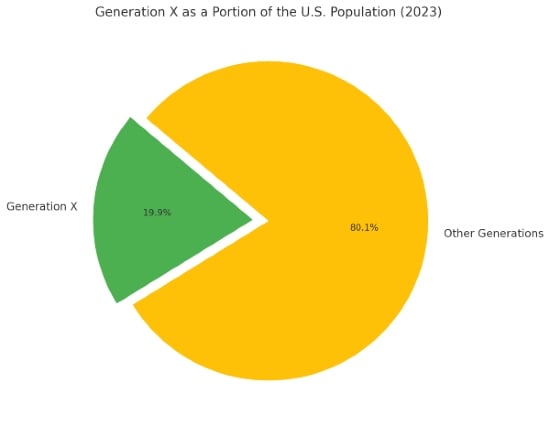
I’m talking about Generation X (“Gen X”).
Understanding Gen X: The Latchkey Generation
Born between 1965 and 1980, Gen X earned the name “Latchkey Kids” as they grew up in a time when both parents were working (not just dad), divorce rates climbed, and inflation was soaring. Thus, they learned to fend for themselves early, growing independent by necessity.
Meanwhile, the oldest Gen Xers turn 60 this year, meaning they can begin penalty-free withdrawals from retirement accounts. By 2027, at age 62, they’ll qualify for Social Security benefits.
Debt Pressures: Many juggle mortgages, student loans (theirs or their children’s), and credit card balances.
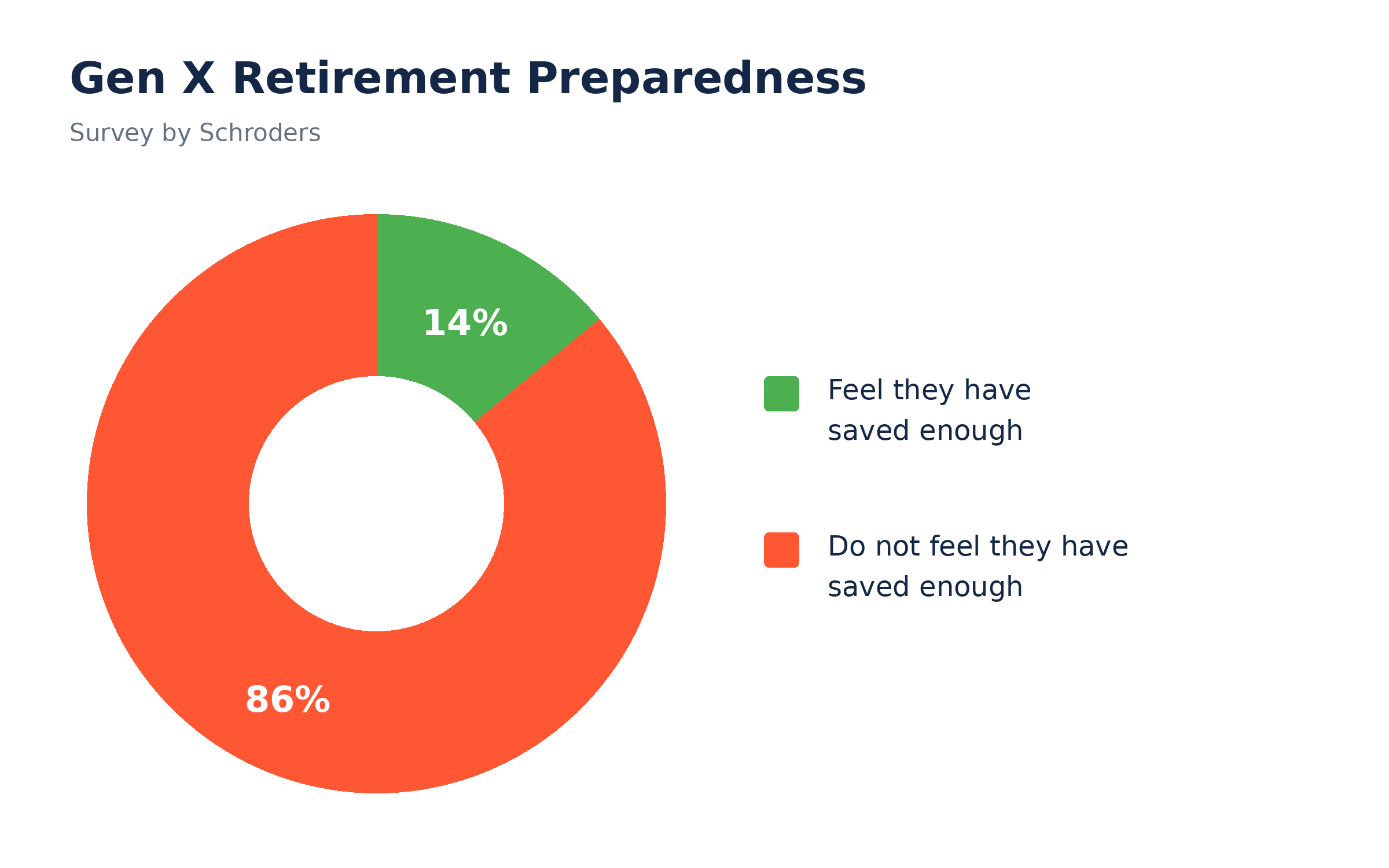
Pessimistic Outlook: Only 14% of Gen Xers believe they’ve saved enough for retirement.
Adding to these hurdles are fears of Social Security cuts and rising living costs. Together, these issues make Gen X one of the least confident generations when it comes to retirement.
Thus, it’s not a stretch to say that Gen X is staring down tough retirement challenges.
Here’s what they’re up against.
Gen X and the 401(k) Experiment
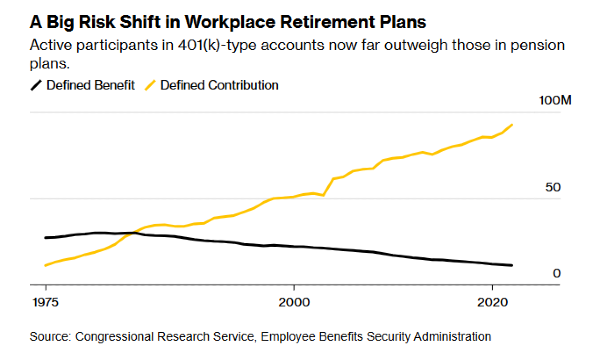
Gen X was the first generation to approach retirement without the safety net of traditional pensions.
See, before the 1980s, defined benefit pensions were the norm. Retirees received guaranteed incomes based on salary and years of service, while employers carried the financial risk, essentially funding their employees’ retirements. But with the rise of 401(k) plans in the late 1970s, this responsibility changed2. Workers now had to save more of their own money, with employers contributing only a small percentage.
Figure 2: Bloomberg, January 2025
And while this shift from pensions to 401(k)s gave workers a bit more control over their savings (and saved businesses money), it left them exposed to market swings and the risk of under-saving - marking a major change in retirement planning since the 1980s.
This greatly increased the sequence risk problem retirees face.
Sequence risk is the danger of bad returns early in retirement. Combine that with withdrawals, and it can drain a portfolio and jeopardise retirement plans. Our EVP, Salvatore M. Capizzi, CEPA, explains it clearly and simply in this excellent piece (read here).
But the early days of 401(k)s were awkward, to say the least. Plans were bare-bones, and many companies didn’t offer them. They lacked basic features like automatic enrollment, savings escalation, and target-date funds. Gen Xers didn’t have access to these tools for years, losing out on valuable time to build wealth.
Adding to this challenge is increased market volatility since the 1980s. Thus, while 401(k) balances have grown alongside rising stock and property values, many Gen Xers remain pessimistic about their retirements, burdened by the risks and uncertainty this system has created.
Worse, more than half (54%) of Gen Xers fear they’ll outlive their savings - higher than Boomers (40%) and Millennials (50%).
Gen Xers are Working Longer and Looking to Claim Social Security Earlier
The result of this savings gap? Retirement will get pushed back as we’ve seen over the last several decades.
For instance, today, nearly 20% of Americans over 65 are still working. That’s almost double what it was 35 years ago. And Gen X is likely to follow this trend - working longer and retiring later.
But more worrisome is that Gen Xers may face social security cuts.
In May 2024, the Social Security Trustees5 Report showed that without legislative action, benefits could be reduced to 79% of scheduled amounts by 2033.
This would mean retirees would only get 79 cents on the dollar.
While it’s likely Social Security will be patched over, the long-term structural issues within the system will require significant changes to stop the bleeding. And as it becomes more of a political issue, anxiety should keep rising.
Gen Xers and Financial Planning: Independence Over Advice
Maybe it’s in their “Latchkey” upbringing, but Gen Xers grew up valuing independence and self-reliance. And this mindset often keeps them from seeking financial help.
For example:
Nearly 48% of Gen Xers haven’t started planning for retirement.
Only 27% work with a financial advisor, trailing Boomers at 37% and Millennials at 31%.
To complicate matters further, nearly 25% of 55-year-olds are counting on financial support from their children - mostly Millennials and Gen Z. But here’s the kicker - many haven’t even had this conversation with their families yet, likely due to the discomfort it brings.
Thus, with many daunting issues plaguing Gen X, they may need to finally admit they need help. They shouldn’t fret as it’s not too late to turn the tide. But the clock is ticking.
Gen X Retirement Planning Checklist
Planning Priority
Question to Ask the Client
Advisor Action
Retirement savings gap
What income will your savings need to provide?
Compare projected spending with income sources and test different retirement dates
Catch-up contributions
Could you increase contributions without straining essential expenses?
Review current contribution limits, eligibility, employer matching, and available cash flow
Debt and family obligations
Which payments or caregiving costs are limiting your savings?
Coordinate debt repayment with retirement contributions and family support
Retirement timing
Could you work longer or move gradually into retirement?
Compare full retirement, part-time work, and delayed retirement scenarios
Social Security
How would claiming at different ages affect your household income?
Review benefit estimates alongside health, cash needs, and spousal considerations
Withdrawal and market risk
What happens if markets fall just as withdrawals begin?
Stress-test the income plan and review withdrawal flexibility and cash reserves to try and reduce sequence risk
Time is running out for Gen X to close their retirement gaps, reshape their financial stories, and get help over going it alone. Advisors, educators, and policymakers have a unique chance to help this generation rewrite their future.
Retirement isn’t just about survival - it’s about thriving. And the time to act is now.
Frequently Asked Questions About Gen X Retirement Savings
Why is Gen X falling behind on retirement savings? Many Gen X households face a combination of limited retirement savings, debt, and competing family expenses. Their working years also overlapped with the move toward employee-directed retirement plans, placing more responsibility on individuals to save and invest. As retirement approaches, advisors can help identify each household’s specific shortfall and prioritize changes to contributions, spending, debt payments, and the planned retirement date.
How much does Gen X need to save for retirement? Gen X retirement savings needs depend on expected spending, retirement age, Social Security, other income, taxes, and how long retirement lasts. Start by estimating annual expenses and subtracting income expected from sources outside the portfolio. The remaining gap helps determine the savings required. An advisor can test that target against inflation, market losses, healthcare costs, and different withdrawal assumptions over time.
Can Gen X catch up on retirement savings after 50? Gen X households can improve retirement readiness after 50 by increasing contributions, using available catch-up provisions, reducing expensive debt, and reassessing their retirement date. The right combination depends on income, account eligibility, and family obligations. Advisors should review current contribution rules and compare realistic scenarios, including part-time work or lower spending, while keeping investment risk aligned with the client’s remaining time horizon.
Should Gen X claim Social Security early? Claiming Social Security early can provide needed income, but it generally reduces the monthly benefit compared with waiting until full retirement age. Gen X clients should compare claiming ages using their health, employment plans, savings, and household needs. Concern about future program changes deserves discussion, alongside the lasting effect of claiming early and the resources needed to support a delay.
This communication is general in nature and provided for educational and informational purposes only. It should not be considered or relied upon as legal, tax or investment advice or an investment recommendation, or as a substitute for legal or tax counsel. Any investment products or services named herein are for illustrative purposes only and should not be considered an offer to buy or sell, or an investment recommendation for, any specific security, strategy or investment product or service. Always consult a qualified professional or your own independent financial professional for personalized advice or investment recommendations tailored to your specific goals, individual situation, and risk tolerance. All examples are hypothetical and are for illustrative purposes only.
Information contained in the materials included is believed to be from reliable sources, but no representations or guarantees are made as to the accuracy or completeness of information. This document is provided for information purposes only and should not be considered as investment advice.
Dunham & Associates Investment Counsel, Inc. is a Registered Investment Adviser and Broker/Dealer. Member FINRA/SIPC. Advisory services and securities offered through Dunham & Associates Investment Counsel, Inc.